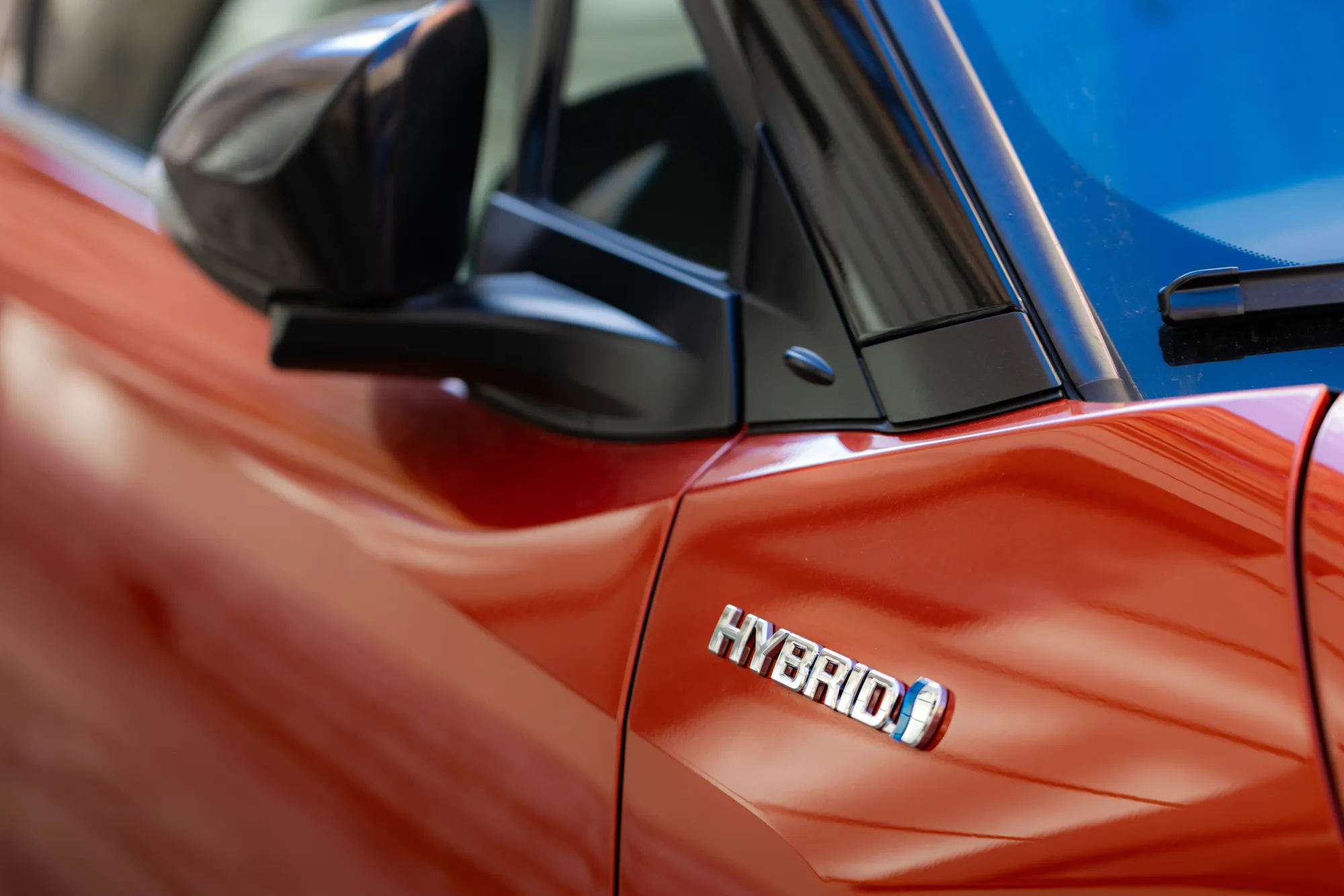
Hybrid cars combine a combustion engine (petrol or diesel) with one or more electric motors to improve efficiency and reduce fuel consumption and emissions.
Currently, there are three main types of hybrid vehicles on the market: conventional hybrid (HEV), plug-in hybrid (PHEV) and mild hybrid (MHEV).
Each utilises electrification differently and has distinct features, advantages and costs.
Conventional hybrid (HEV)
The HEV (Hybrid Electric Vehicle), also known as a full hybrid or non-plug-in hybrid, combines an internal combustion engine with an electric motor powered by a small battery that recharges automatically when braking or decelerating.
It does not need to be connected to an external power source.
Key features
- Internal combustion engine and electric motor.
- Small battery (approx. 0.8–2 kWh).
- No external charging required.
- It can run in 100% electric mode for short distances (1–5 km).
- Total range similar to a conventional car.
Advantages
- Lower fuel consumption than a petrol or diesel car.
- Does not rely on charging infrastructure.
- Very efficient in town and urban traffic.
- Relatively simple maintenance.
Disadvantages
- Very limited electric range.
- Higher price than a conventional car.
- Lower fuel savings on the motorway.
Approximate average price
- Between £26,000 and £35,000 depending on segment and specification.
Recommended use
The conventional hybrid is particularly suitable for:
- Urban driving or daily city journeys.
- Drivers who make frequent stops and starts (city traffic).
- People who do not have access to a charging point.
- Users looking to reduce fuel consumption without changing their driving habits.
It is in the city where this type of hybrid makes the best use of the electric motor and the energy recovery system.
Plug-in hybrid (PHEV)
The PHEV (Plug-in Hybrid Electric Vehicle) combines a combustion engine with an electric motor, but has a much larger battery that can be recharged from a domestic socket or at a charging point.
Key features
- Internal combustion engine and powerful electric motor.
- Large battery (approx. 8–25 kWh).
- Typical electric range of 40 to 100 km.
- Can be driven as an electric car on short journeys.
Advantages
- Allows driving in fully electric mode for several kilometres.
- Very low fuel consumption if recharged frequently.
- Long total range (combustion and electric).
- Access to tax benefits or more favourable environmental labels.
Disadvantages
- Higher purchase price.
- Increased weight due to the battery.
- If not recharged regularly, fuel consumption may increase.
Approximate average price
- Between£32,000 and £45,000 on the European market.
Recommended use
This type of hybrid is particularly useful for:
- Drivers who can recharge the car at home or at work.
- People with daily journeys of less than 50–80 km.
- Users who alternate between urban journeys and occasional long trips.
- Drivers who want to drive in electric mode most of the time, but retain the range of a combustion engine car.
It is one of the most versatile options for those who wish to move towards electric mobility without being entirely dependent on charging points.
Mild Hybrid (MHEV)
The MHEV (Mild Hybrid Electric Vehicle) uses a small auxiliary electric system that assists the combustion engine at specific moments, such as when starting off or accelerating.
However, it cannot power the vehicle on its own in electric mode.
Key features
- Combustion engine with electric assistance.
- 12- or 48-volt electrical system.
- Cannot run in pure electric mode.
- Recovers energy during braking.
Advantages
- More affordable than other hybrids.
- Lower fuel consumption than a traditional car.
- Simple and reliable technology.
- No need for a plug.
Disadvantages
- Limited fuel savings.
- Does not allow for electric driving.
- Less environmental benefit than other hybrids.
Approximate average price
- Between £20,000 and £28,000 depending on the model.
Recommended use
Mild hybrids are suitable for:
- Drivers who undertake mixed city and motorway journeys.
- Users who wish to improve fuel economy without paying the cost of a full hybrid.
- People who cover long distances on country roads or motorways.
- Drivers seeking a smooth transition to electrified technologies.
It is an intermediate solution between a traditional car and a more advanced hybrid.
Main differences
| Type | External charging | Electric range | Average price | Level of electrification |
|---|---|---|---|---|
| MHEV | No | None | £20,000–£28,000 | Low |
| HEV | No | 1–5 km | £26,000–£35,000 | Medium |
| PHEV | Yes | 40–100 km | £32,000–£45,000 | High |
Generally speaking, the more electrified the hybrid system is, the greater the potential fuel savings, but the purchase price is also usually higher.
Frequently Asked Questions
We answer the most common questions about hybrid vehicles, their features and uses.
What type of hybrid car is the most common?
The conventional hybrid (HEV) is one of the most widespread because it combines efficiency, ease of use and a mid-range price.
Which is the cheapest hybrid?
Mild hybrids (MHEVs) are usually the most economical, as their electrical system is simpler.
Which saves the most fuel?
Under ideal conditions, the plug-in hybrid (PHEV) can offer the greatest savings, especially if used frequently in electric mode.
Can you drive a plug-in hybrid without recharging it?
Yes, but you would lose much of its energy efficiency and it would essentially function as a heavier combustion-engine car.
Do hybrid cars require special maintenance?
Generally speaking, not much more than a conventional car, although they may require specific checks on the electrical system and the battery.


