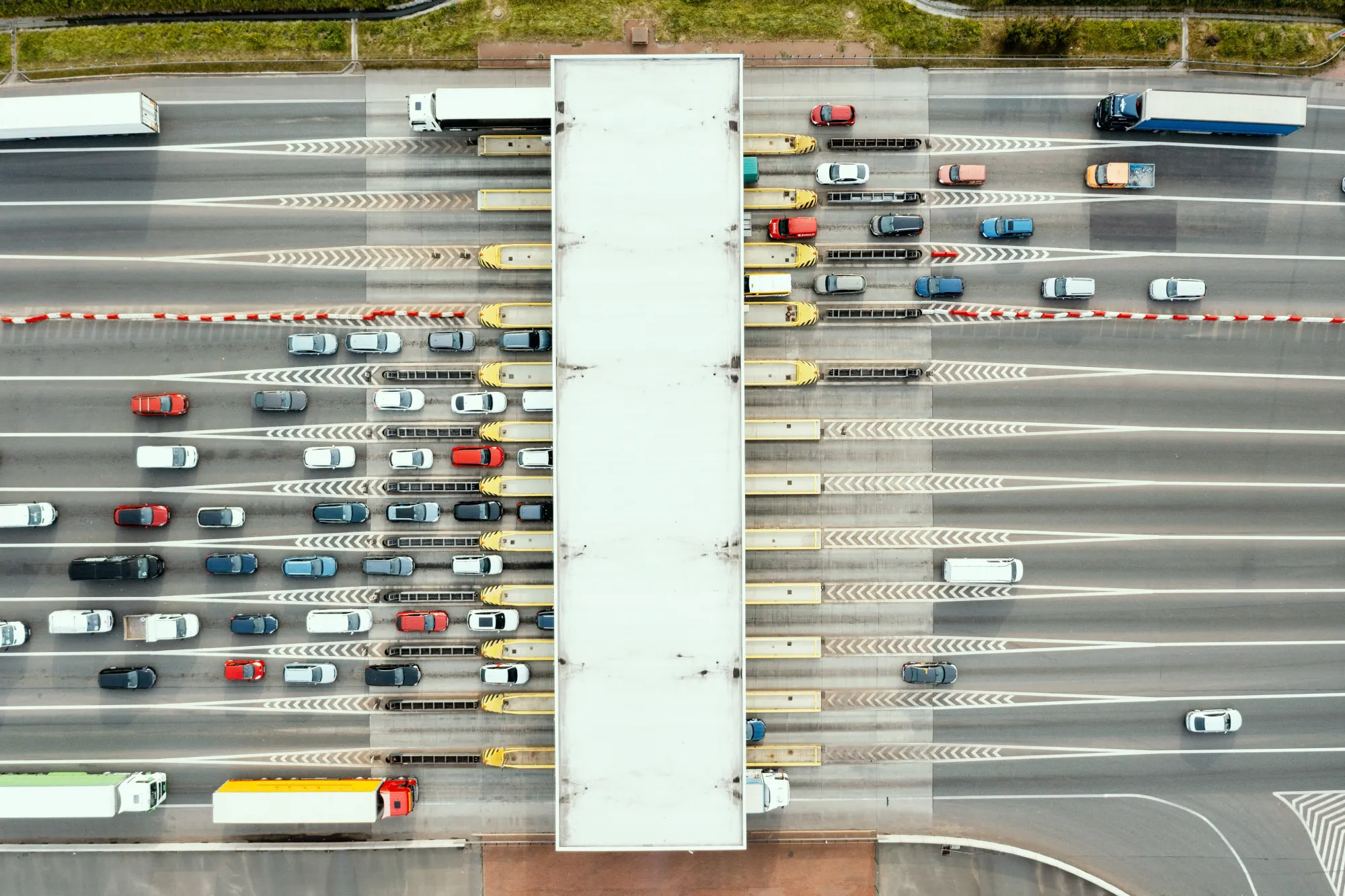
In 2026, tolls in Europe will change significantly: they will become more digital, more closely linked to emissions, and, in many cases, more expensive or complex.
These changes will particularly affect commercial transport, although they will also impact private drivers.
A New, More Digital and Sustainable Toll Model
The main change in Europe is the transformation of the system toward a more technological and environmentally friendly model.
Tolls will no longer be fixed rates and will instead be calculated based on multiple variables:
- Vehicle CO₂ emissions
- Distance traveled
- Vehicle type and weight
- Actual use of the infrastructure
This evolution responds to European regulations, which promote a system where those who pollute the most pay more.
Additionally, the revision of the Eurovignette Directive reinforces the application of emissions-based tolls starting in July 2026, aiming to standardize systems across countries.
CO₂-based tolls: the big change in 2026
One of the most significant changes is the widespread introduction of tolls based on pollutant emissions.
Starting July 1, 2026:
- Heavy-duty vehicles will pay based on their emission levels
- Cleaner vehicles will receive reduced rates
- Fleet renewal toward less polluting models is encouraged
This system represents a structural change in European transport, as it introduces direct environmental criteria into the cost of road travel.
The Certificate of Conformity (COC) can also play a significant role in the context of the new European tolls, especially for heavy-duty vehicles.
This document certifies the vehicle’s technical characteristics, including its CO₂ emissions, a key factor for calculating rates in toll systems based on environmental criteria.
In practice, having the COC facilitates the correct classification of the vehicle on electronic toll platforms and prevents errors that could lead to additional costs, especially in countries where the price depends directly on emission levels.
Digitalization and Free-Flow Tolls
Another major change is the implementation of toll systems without physical barriers.
For example:
- Some countries are adopting “free-flow” systems with cameras and sensors
- Payment is processed automatically without stopping the vehicle
- Congestion is reduced and traffic flow improves
A notable example is Croatia, which will implement this model in 2026 to eliminate traditional toll booths.
Additionally, the use of electronic devices (OBUs) and satellite technologies to calculate tolls based on actual distance traveled is expanding.
Changes by country: increases, eliminations, and new regulations
Changes are not uniform, and each country is introducing specific measures:
Netherlands
- Replacing the Eurovignette with a per-kilometer system
- Mandatory use of on-board units
- Effective as of July 2026
Germany
- Electric trucks begin paying a portion of the toll
- Adjustment of the system to include new categories
France
- Advancement of the free-flow system
- Changes to concessions and rates
Spain
- Toll increases on concession highways
- Some highways become toll-free (such as sections of the AP-7)
Portugal
- Elimination of tolls on certain sections
- Adjustments to rates and exemptions
Austria and Belgium
- Rates more closely linked to emissions and noise
- Price increases and annual adjustments
Overall, Europe is combining price increases with environmental incentives and the selective elimination of tolls on certain roads.
Price Increases on European Roads
In parallel with technological changes, many countries are implementing rate hikes in 2026.
Examples:
- Austria: significant increases based on emissions
- Poland: average increase exceeding 5%
- Italy and Greece: moderate increases
- France: average increase of around 1%
These increases are driven by inflation, infrastructure maintenance, and the transition to more advanced systems.
Impact on carriers and drivers
The changes to tolls will have direct consequences for the transport sector:
- Greater operational complexity for fleets
- Need to adapt vehicles and technology
- Increased costs for more polluting vehicles
- Incentive for electrification
Ultimately, these costs may be passed on to the final price of goods transported by road.
FAQs
We answer the most common questions about the new changes to the toll system in Europe for 2026.
When do the new tolls take effect?
The key date is July 1, 2026, when emissions-based rates begin to apply in several countries.
What is the Eurovignette and what is changing?
It is a toll system for trucks in Europe. In 2026, it will be reformed to include CO₂ criteria and, in some countries, replaced by distance-based tolls.
Will there be more or fewer tolls in Europe?
Both: some countries are eliminating tolls on certain roads, but overall, rates are increasing and the use of payment systems is expanding.
Does this affect private cars?
Mainly trucks, but private drivers will also see changes in prices and payment systems in some countries.
What is a free-flow toll?
A barrier-free system where payment is collected automatically via cameras or electronic devices.
Conclusion
The year 2026 marks a turning point for tolls in Europe.
The transition to digital systems, the use of environmental criteria, and regulatory harmonization are completely transforming the way we pay for road use.
Although these changes aim for more sustainable and efficient mobility, they also entail higher costs and require adaptation by carriers and users.


