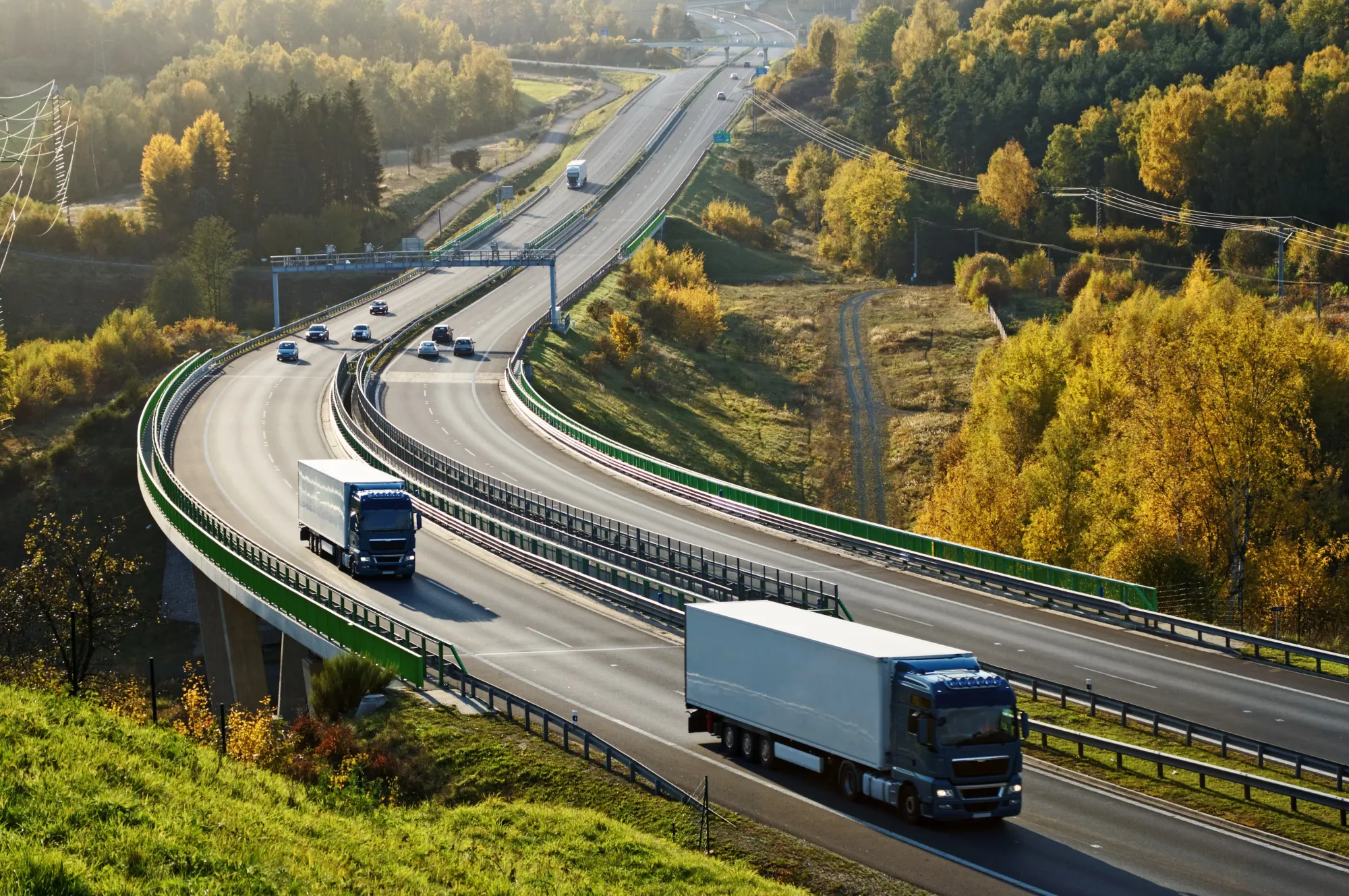
These systems vary not only in how the toll is calculated and charged, but also in the method of payment and how to obtain the necessary devices or authorisations.
For lorries, especially those over 3.5 tonnes (and in some countries, 12 tonnes), these details are essential to avoid penalties and plan costs efficiently.
Whether you have a transport company or decide to take a road trip through Europe in a motorhome, you will need to know what type of toll you will have to pay according to the technical specifications of your vehicle's Certificate of Conformity.
Types of European tolls by country
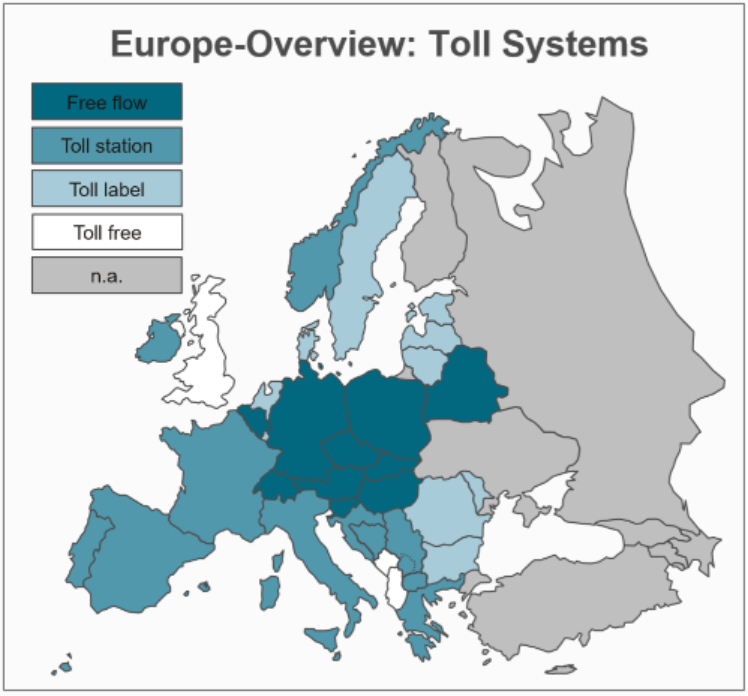
Each European country may have one or more toll systems, including manual or electronic payment barriers, time-based vignettes, or distance-based tolls with OBU/EETS devices.
Germany
Type of toll: Electronic distance-based (Toll Collect).
Vehicles: Lorries ≥ 7.5 t must pay; light vehicles are exempt.
How it works: You pay per kilometre based on the number of axles and emission class.
Device and payment:
You can register your vehicle on the Toll Collect portal and use an OBU installed in the lorry.
Alternatively, you can pay without an OBU by registering routes manually online or at authorised stations before driving.
France
Type of toll: Traditional barriers and barrier-free free-flow systems.
Vehicles: All vehicles pay; lorries pay more depending on class.
How it works: At barriers, you take a ticket or pay by electronic toll collection.
Device and payment:
The device is called TIS-PL for lorries and can be requested from electronic toll operators.
You can also pay on national websites or the free-flow system allows online payment after passing under gantries.
Italy
Type of toll: Barriers on motorways.
Vehicles: All pay; lorries pay more than cars.
Device and payment:
Telepass (or Telepass EU) is the usual device, contracted directly with the provider or through EETS services that manage it.
You can also pay at booths with a card or cash where accepted.
Spain
Type of toll: Barriers on concessioned roads; most of the network is free.
Vehicles: Lorries pay according to axles.
Device and payment:
VIA-T is the electronic toll device available from banks or electronic toll operators.
On motorways with barriers, you can also pay directly by card or cash at booths.
Portugal
Type of toll: Electronic free-flow system and limited barriers.
Vehicles: Lorries pay more based on axles.
Device and payment:
VIA Verde is the electronic payment unit for tolls.
Alternatives include prior online registration of the vehicle or purchase of a temporary pass on the operator's website.
Belgium
Type of toll: Electronic by distance (Viapass).
Vehicles: Lorries > 3.5 t.
Device and payment:
Mandatory OBU, which can be obtained through EETS providers or authorised distributors.
Netherlands
Type of toll: Currently no national tolls for lorries.
From 2026, a toll per km with OBU is expected within the EETS area.
Device and payment: Currently not required.
Luxembourg
Toll type: Eurovignette (time-based payment).
Vehicles: Lorries ≥ 12 t.
How it works: Vignette valid for several member countries.
How to obtain it:
Purchased online with vehicle details (number plate and category) before driving.
Denmark
Type of toll: Eurovignette and bridge/tunnel tolls.
Vehicles: Lorries ≥ 12 t.
Device and payment:
The vignette is purchased online and is mandatory before transit.
Bridges and tunnels are generally paid for online or with local devices (Bizz).
Sweden
Type of toll: Eurovignette for lorries; urban tolls.
Vehicles: ≥ 12 t.
Device and payment:
The vignette can be purchased online before driving on toll roads.
Urban tolls are paid by linking the registration number or using designated platforms.
Austria
Type of toll: Distance-based toll for lorries; vignette for passenger cars.
Vehicles: Lorries ≥ 3.5 t.
Device and payment:
GO-Box mandatory; purchased at service stations or points of sale before entering.
H3: Switzerland
Type of toll: Distance-based toll + road tax.
Vehicles: Lorries ≥ 3.5 t.
Device and payment:
Request the OBU device or pay via EETS provider services.
The annual vignette for passenger cars can also be purchased online or at physical points before driving.
Norway
Type of toll: Barriers and free flow.
Vehicles: Lorries pay more.
Device and payment:
AutoPASS can be purchased before or after passing through tolls: online or at participating businesses.
United Kingdom
Toll type: Specific tolls (bridges/tunnels) and HGV Levy for lorries ≥ 12 t.
Device and payment:
HGV Levy is paid online or at authorised British government locations.
Bridge/tunnel tolls are paid at local collection points or through designated payment systems.
Eastern Europe (Poland, Czech Republic, Hungary, Slovakia)
Poland: e-TOLL via OBU or payment app (lorries ≥ 3.5 t).
Czech Republic: Mandatory Myto CZ type OBU.
Hungary: Electronic vignette or HU-GO depending on the route (lorries).
Slovakia: Satellite OBU for lorries ≥ 3.5 t.
How to obtain and pay: All are managed online through official portals or EETS providers covering multiple countries.
Countries with no tolls or extremely limited use
In Europe, there are certain countries where tolls are almost non-existent:
- Netherlands (currently)
- Estonia
- Finland
- Latvia
- Lithuania
- Iceland (only specific tunnels)
Importance of the Certificate of Conformity (COC) for tolls
The Certificate of Conformity (COC) is an official document that verifies the technical specifications of the vehicle.
It is used to:
- Register your vehicle correctly in electronic toll systems.
- Determine the correct tariff class, avoiding incorrect declarations of axles, weight and emissions.
- Prevent penalties and surcharges, as automatic systems compare declared data with actual data.
- Request OBU devices or vignettes; many portals require this information to complete the registration.
Conclusions
Europe has a varied toll system: from physical barriers to fully electronic systems with OBUs/EETS, and time-based vignettes in some countries. For lorries (≥ 3.5 t or ≥12 t depending on the country):
- It is crucial to identify the type of toll in the country and whether a device is required.
- Many countries allow online payment, via app or official portal, without the need for an OBU, although this is recommended for frequent operators.
- Technical certification of the vehicle (COC) is essential for correct classification and to avoid penalties.
Advance planning with devices or online payments simplifies international travel and optimises road transport costs.


