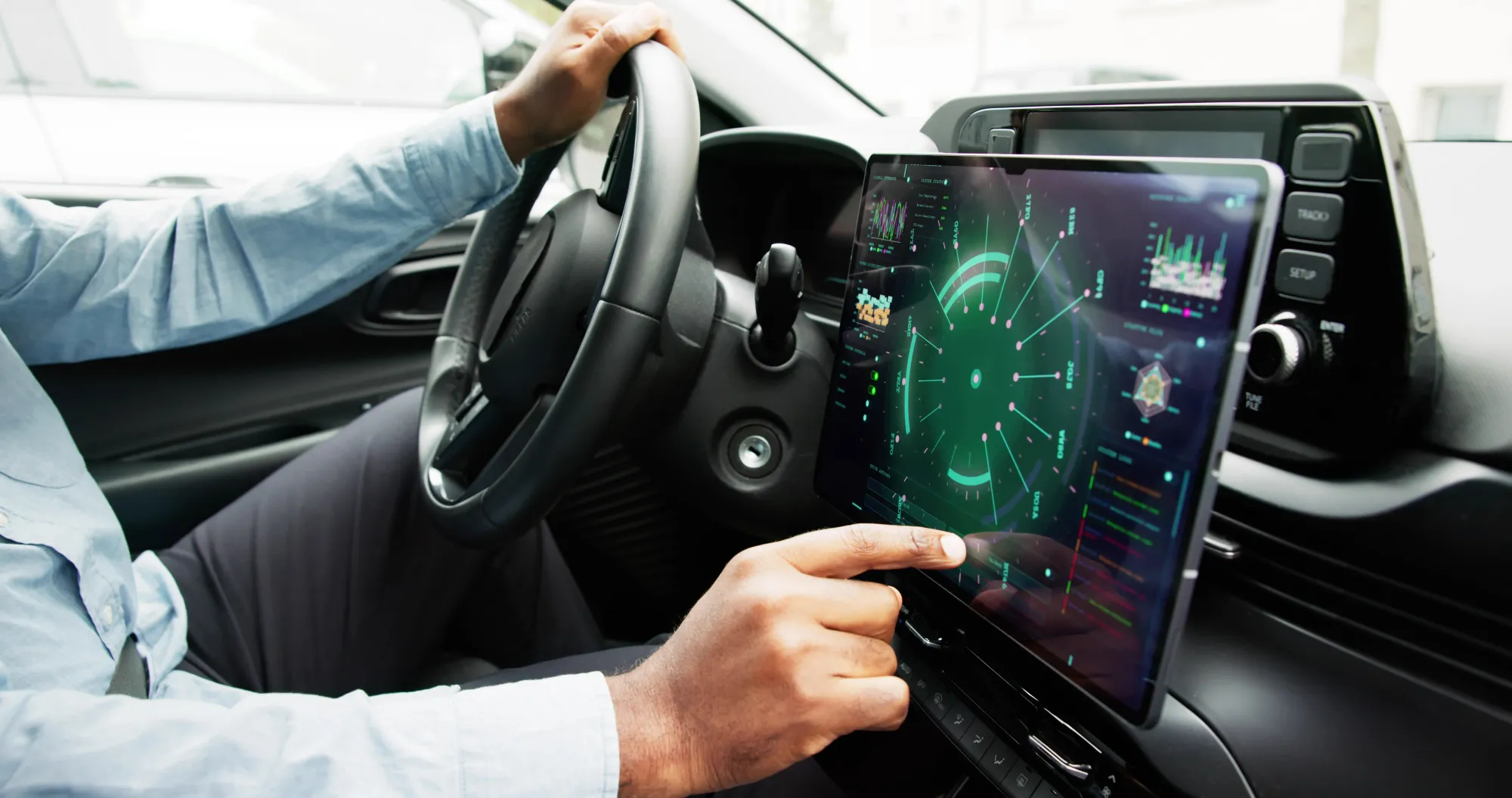
Autonomous driving is a technology that allows a vehicle to drive with little or no human intervention through the use of sensors, software, and artificial intelligence.
Its goal is to improve road safety, traffic efficiency, and driving comfort.
What is autonomous driving?
Autonomous driving consists of a vehicle being able to perceive its surroundings, make decisions, and execute manoeuvres automatically.
This includes actions such as accelerating, braking, staying in lane, changing direction or reacting to obstacles, without the driver having to intervene constantly.
Although we often talk about “self-driving cars”, in practice many current vehicles combine automatic functions with human supervision.
Types of autonomous driving
Autonomous driving is typically classified according to levels defined by the SAE (Society of Automotive Engineers):
- Level 0: No automation. The driver controls everything.
- Level 1: Driver assistance (adaptive cruise control or lane keeping).
- Level 2: Partial automation. The car can accelerate, brake and turn, but the driver must supervise (very common today).
- Level 3: Conditional automation. The vehicle can drive itself in certain situations, although it may ask the driver to take control.
- Level 4: High automation. The car can drive itself in specific environments without human intervention.
- Level 5: Full automation. No steering wheel or pedals are needed, and the car can drive in any situation.
How does it work?
Autonomous driving is based on a combination of several technologies:
- Sensors: cameras, radars, lidar and ultrasounds that detect the environment.
- High-precision maps: these allow the vehicle to know the road in great detail.
- Artificial intelligence and algorithms: these process data, recognise objects and make decisions in real time.
- Control systems: these execute the vehicle's physical actions, such as braking or turning the steering wheel.
This entire system works continuously to anticipate what is happening on the road.
Is autonomous driving the same as intelligent driving?
Not exactly.
Autonomous driving refers to the vehicle's ability to drive itself.
Intelligent driving is a broader concept that includes driver assistance systems, connectivity, data analysis and optimisation of the driving experience, even if the car is not fully autonomous.
Examples of autonomous vehicles on the market
Currently, most vehicles available are at level 2 and, in very specific cases, level 3:
- Tesla: Autopilot and Full Self-Driving (advanced assistance with supervision).
- Mercedes-Benz: Drive Pilot (level 3 in certain conditions and countries).
- BMW and Audi: advanced assistance systems with automated functions on motorways.
- Waymo: fully autonomous vehicles operating in mobility services in specific cities.
The future of autonomous driving: what to expect
In the coming years, we can expect:
- A gradual expansion of levels 3 and 4.
- Greater regulation and clearer legal frameworks.
- Integration with smart cities and connected vehicles.
- Reduction in accidents caused by human error.
Full adoption will be gradual and will depend on technology, user confidence and legislation.
Leading countries in autonomous driving
The countries that are most committed to autonomous driving are:
United States
It is currently one of the global leaders in both technology and the deployment of autonomous vehicles.
Companies such as Waymo, Tesla and Zoox operate advanced robotaxi programmes or automated systems.
The country stands out for its heavy investment in AI, high-definition maps and regulatory frameworks that facilitate testing in several cities.
China
China has seen very rapid growth in autonomous vehicles and robotaxis in multiple cities.
Local companies have obtained testing permits and deployed pilot and even commercial services in urban areas.
The Chinese market combines government support, high-volume testing and a robust technology ecosystem.
United Arab Emirates and Saudi Arabia
These Middle Eastern countries are among the first to adopt commercial testing and robotaxi services, functioning as regulatory ‘sandboxes’ for new mobility technologies.
Singapore
With strong infrastructure and regulation for autonomous mobility, Singapore is implementing testing programmes on buses and robotaxis to improve urban transport efficiency.
Germany and the United Kingdom
In Europe, Germany is a leader in the automotive industry and its interest in advanced vehicles, while the United Kingdom is preparing to launch autonomous services with support from the public and private sectors.
Japan and South Korea
Countries with a strong technological and automotive tradition are promoting autonomous vehicle testing and collaborations with local and international companies.
Frequently asked questions
We answer the most common questions about autonomous driving.
Are autonomous cars completely safe?
They are promising in terms of safety, but still require testing, regulation and human supervision in many cases.
When will we see 100% autonomous cars on the roads?
The technology exists, but its widespread adoption will still take years due to legal, technical and social factors.
Will I need a driving license with an autonomous car?
It will depend on the level of autonomy and the legislation in each country.
Will autonomous driving replace the driver?
Rather than replacing them immediately, it will assist them and reduce their workload, at least in the short to medium term.


